You can install knwler in minutes using pipx. It creates an isolated environment and makes the knwler command available globally without affecting your system Python or other projects.
> pipx install knwler
After installation, run the pipeline on your documents with a single command. To process a PDF and export everything to a specific folder:
You can also install via UV or directly from GitHub for the latest features:
> uv add knwler
Features
Capabilities
Enterprise-grade document intelligence
Purpose-built for organizations that need to extract structured insight from regulatory, legal, and compliance documents at scale.
✦
Automatic Schema Discovery
The pipeline analyzes document samples and infers optimal entity and relation types. No manual ontology engineering required.
🌐
Multilingual by Design
Auto-detects language and adapts all prompts. Supports English, German, French, Spanish, and Dutch out of the box.
🔒
Air-Gapped Operation
Run fully on-premise with local LLMs. Zero data leaves your infrastructure. Meets the strictest data sovereignty requirements.
〰
Community Detection
Automatically discovers clusters of related entities and assigns human-readable topic labels for instant thematic insight.
📄
Rich Export Ecosystem
Export to JSON, GML, GraphML, and interactive HTML. Import directly into Neo4j, Gephi, yEd, Memgraph, or SurrealDB.
⬆
Incremental Augmentation
Process new documents and the existing graph is augmented, not rebuilt. Entity descriptions are consolidated intelligently.
How It Works
Process
From document to knowledge in three steps
A streamlined pipeline that turns unstructured text into structured, queryable knowledge.
1
Ingest
Upload PDF, text, or Markdown documents. The system extracts and segments content into optimally sized chunks for analysis.
2
Extract
LLM-powered extraction identifies entities, relationships, and topics. Schema is discovered automatically or supplied by your team.
3
Deliver
Receive an interactive knowledge graph with community detection, topic labels, and exports ready for your graph analytics platform.
Use Cases
Applications
Built for high-stakes document workflows
Trusted by teams where accuracy, traceability, and data privacy are non-negotiable.
📋
Regulatory Compliance
Map entities and obligations across 100+ page regulatory documents. Understand cross-references and dependencies at a glance.
🖥
Legal Analysis
Extract parties, clauses, and contractual relationships from legal documents. Surface hidden connections across document sets.
📚
Research Intelligence
Build knowledge graphs from academic papers and reports. Identify key concepts, authors, and methodological connections.
👤
Due Diligence
Accelerate M&A and audit processes by automatically structuring findings from financial disclosures and corporate filings.
Examples
Real documents, real results
Each example was processed in minutes with full knowledge graph output. Explore the interactive reports yourself.
Dutch
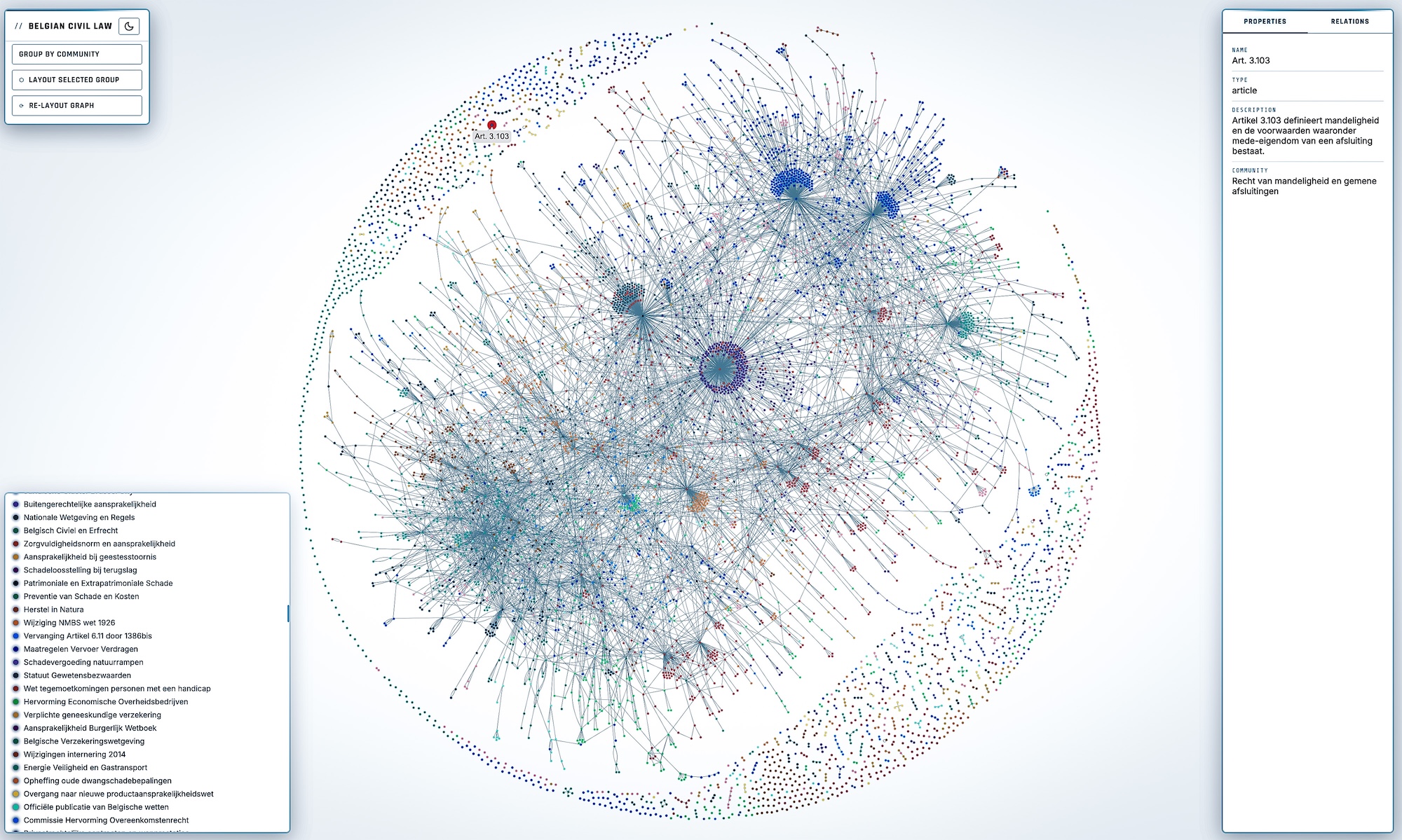
Belgian Civil Law (Enterprise Data Viz)
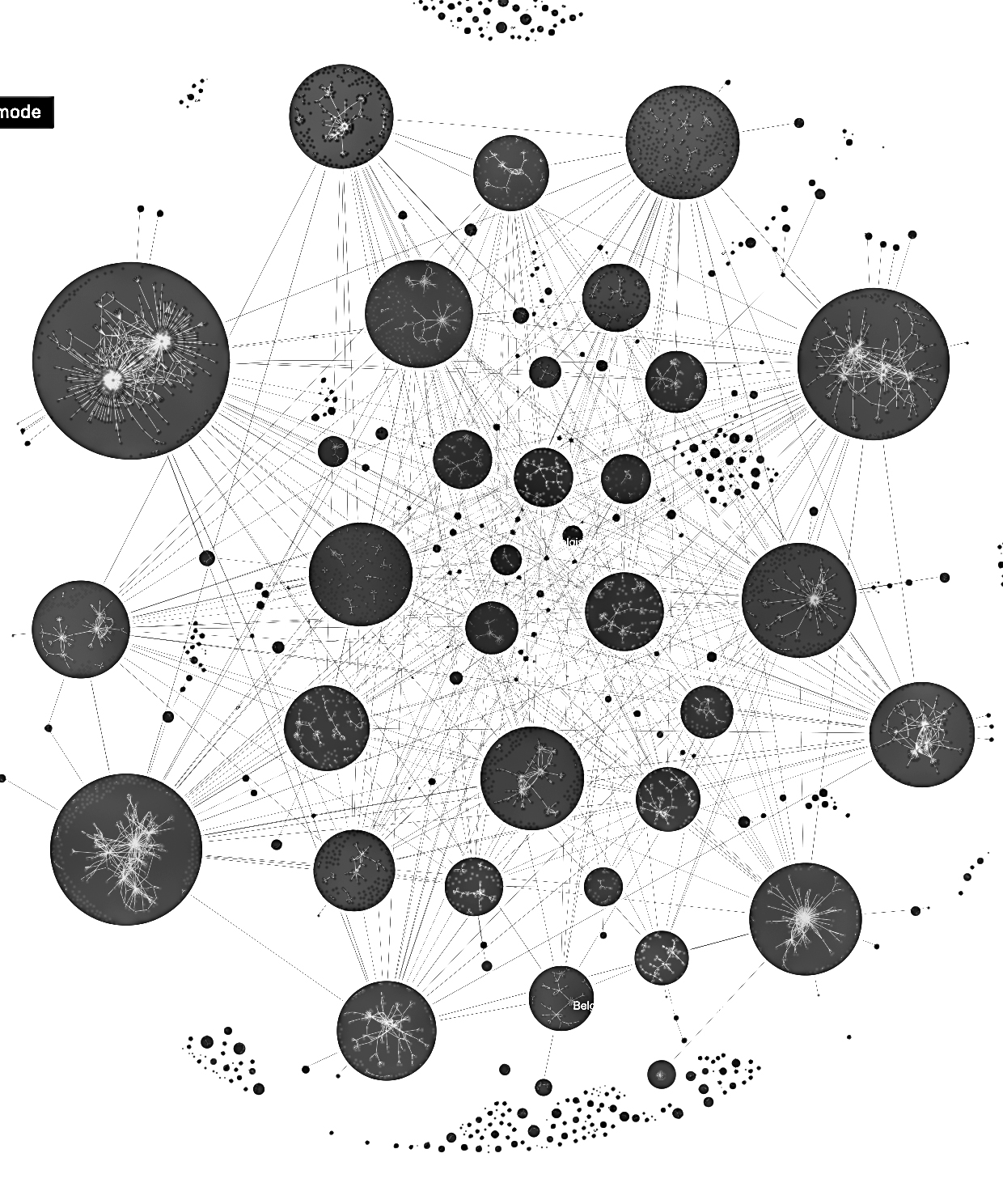
All nine books of the Belgian Civil Law were extracted and consolidated via Knwler. The visualization was made with Linkurious Ogma.
English
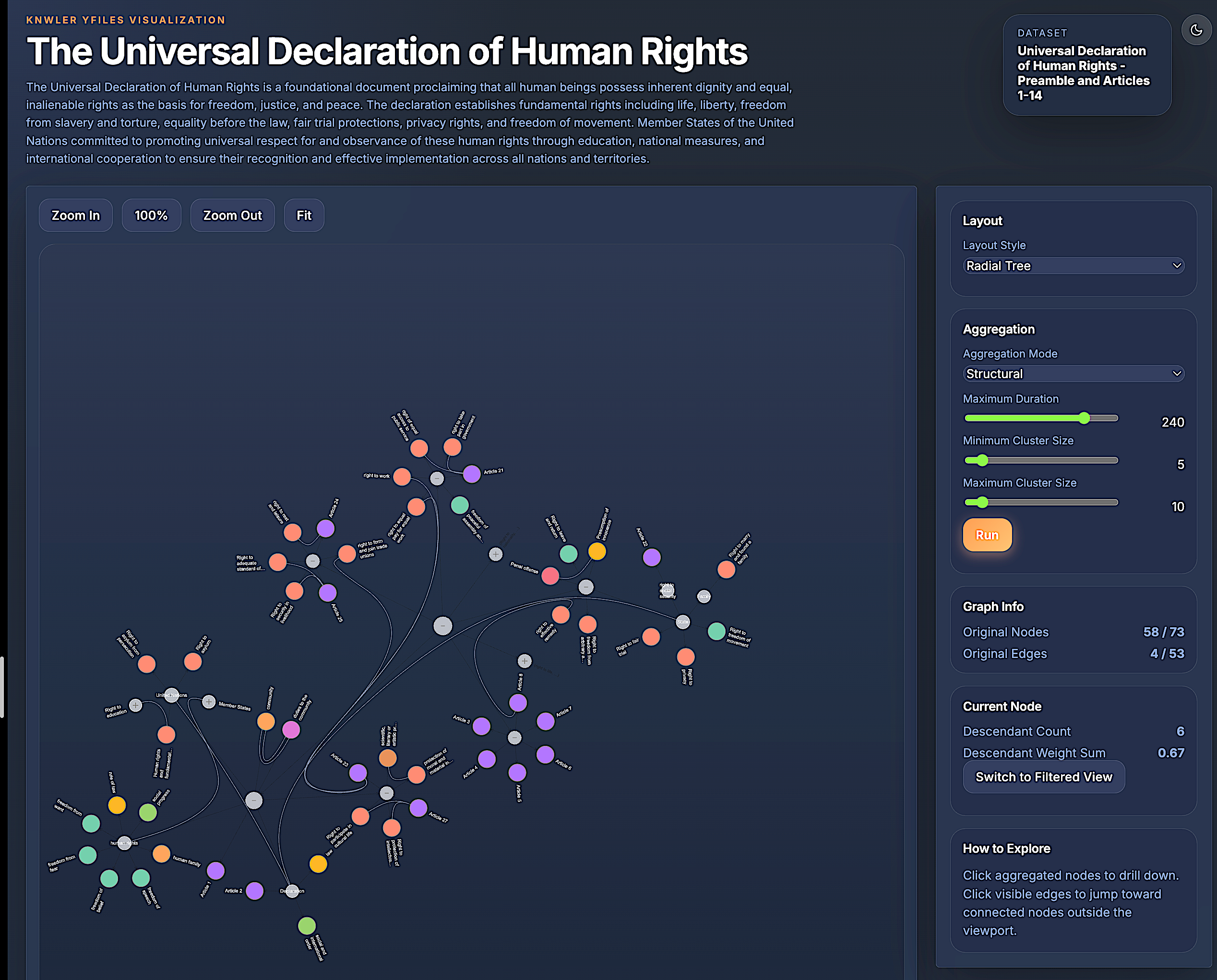
Human Rights (Enterprise Graph Viz)
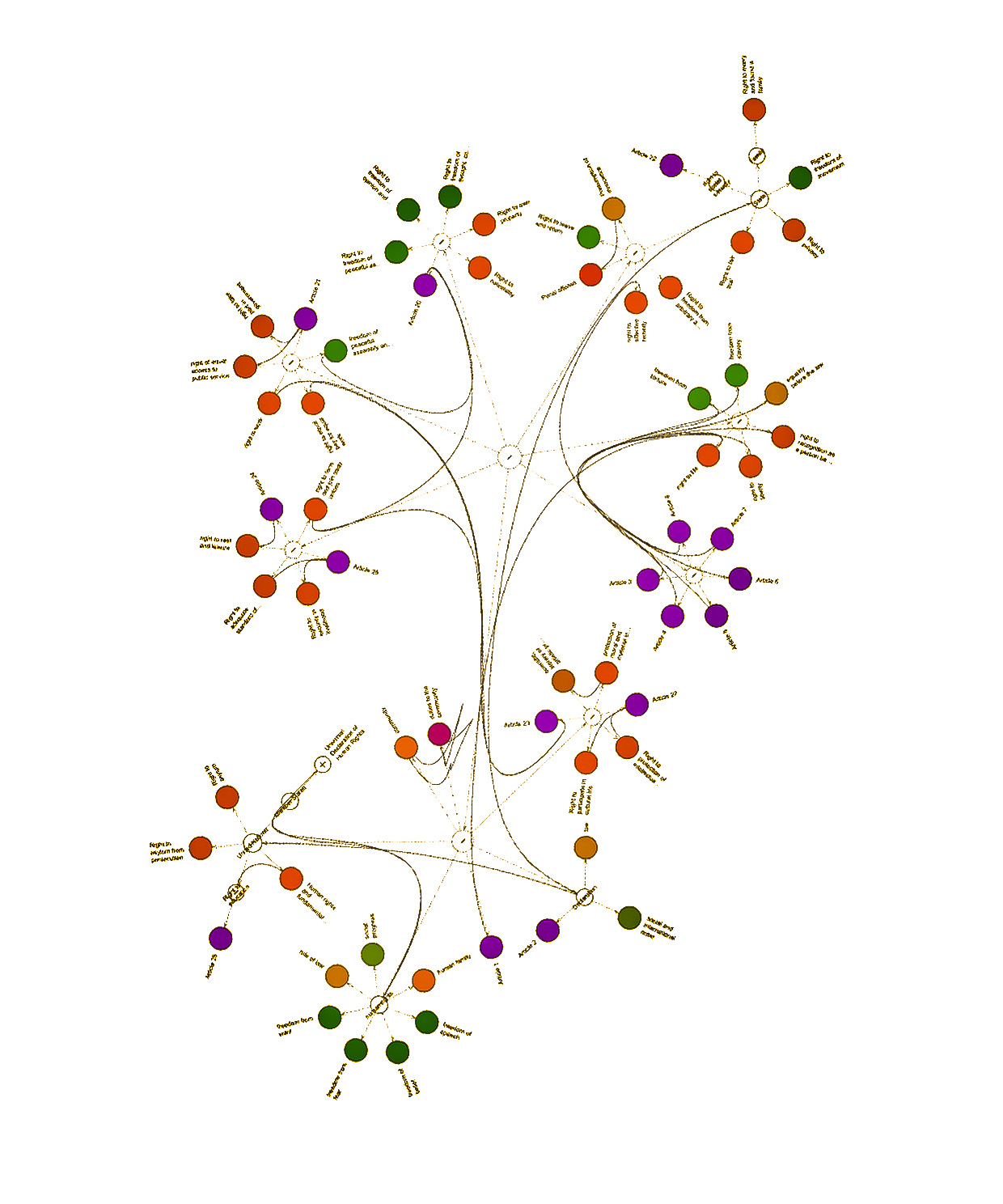
The Human Rights in an advance graphviz based on yFiles.
Deutsch
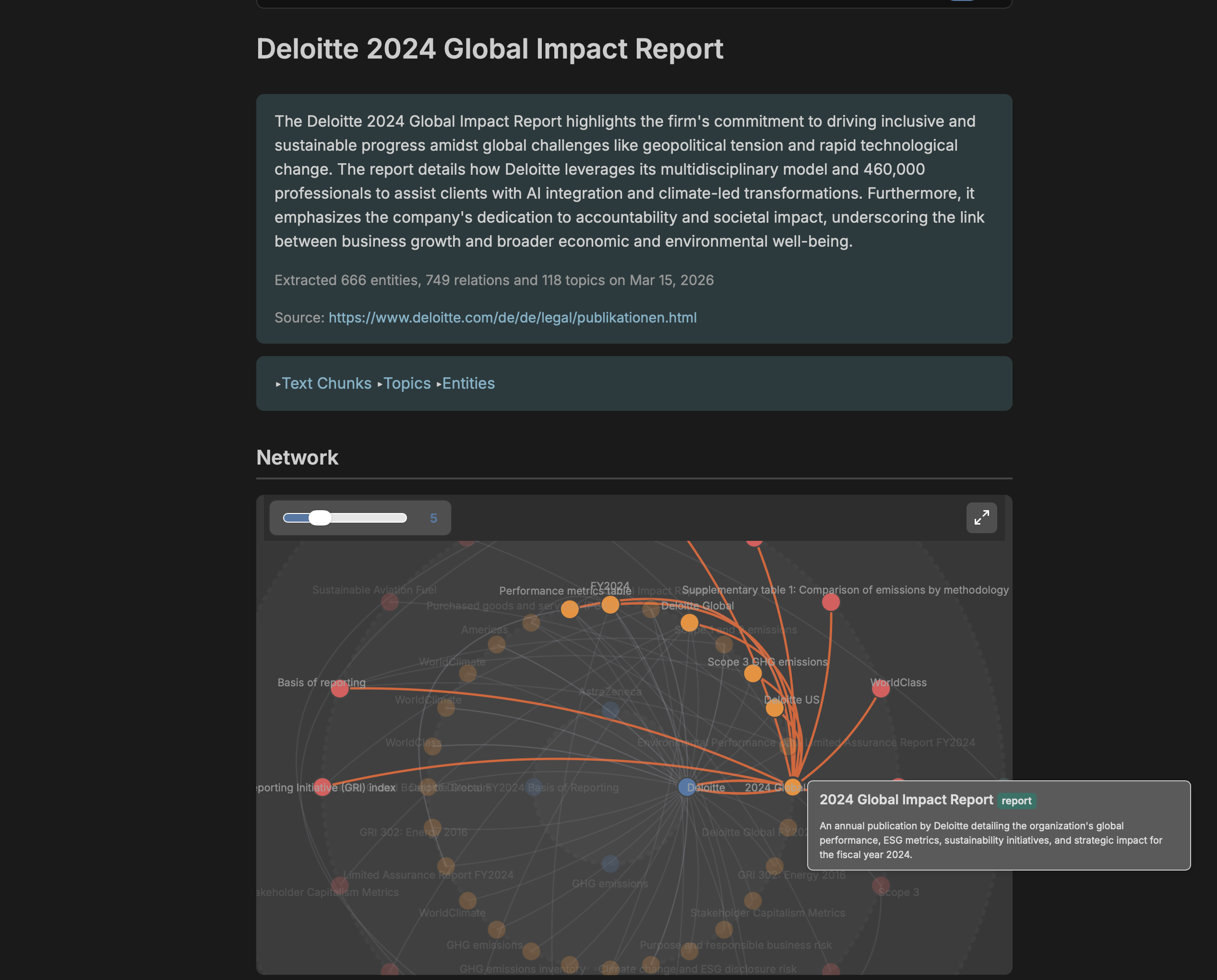
Deloitte Nachhaltigkeitsbericht 2024
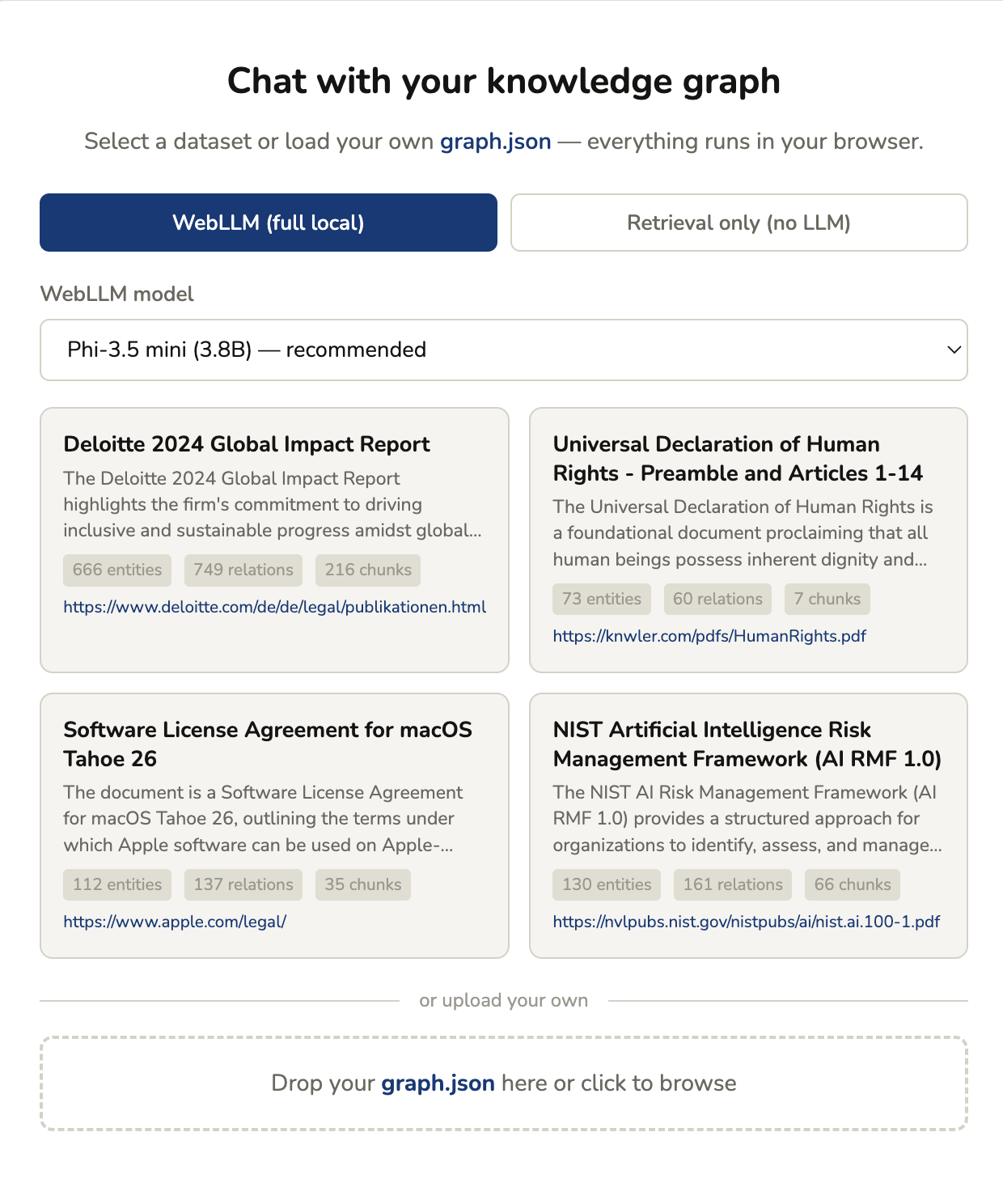
The Deloitte 2024 Global Impact Report highlights the firm's commitment to driving inclusive and sustainable progress amidst global challenges like geopolitical tension and rapid technological change.
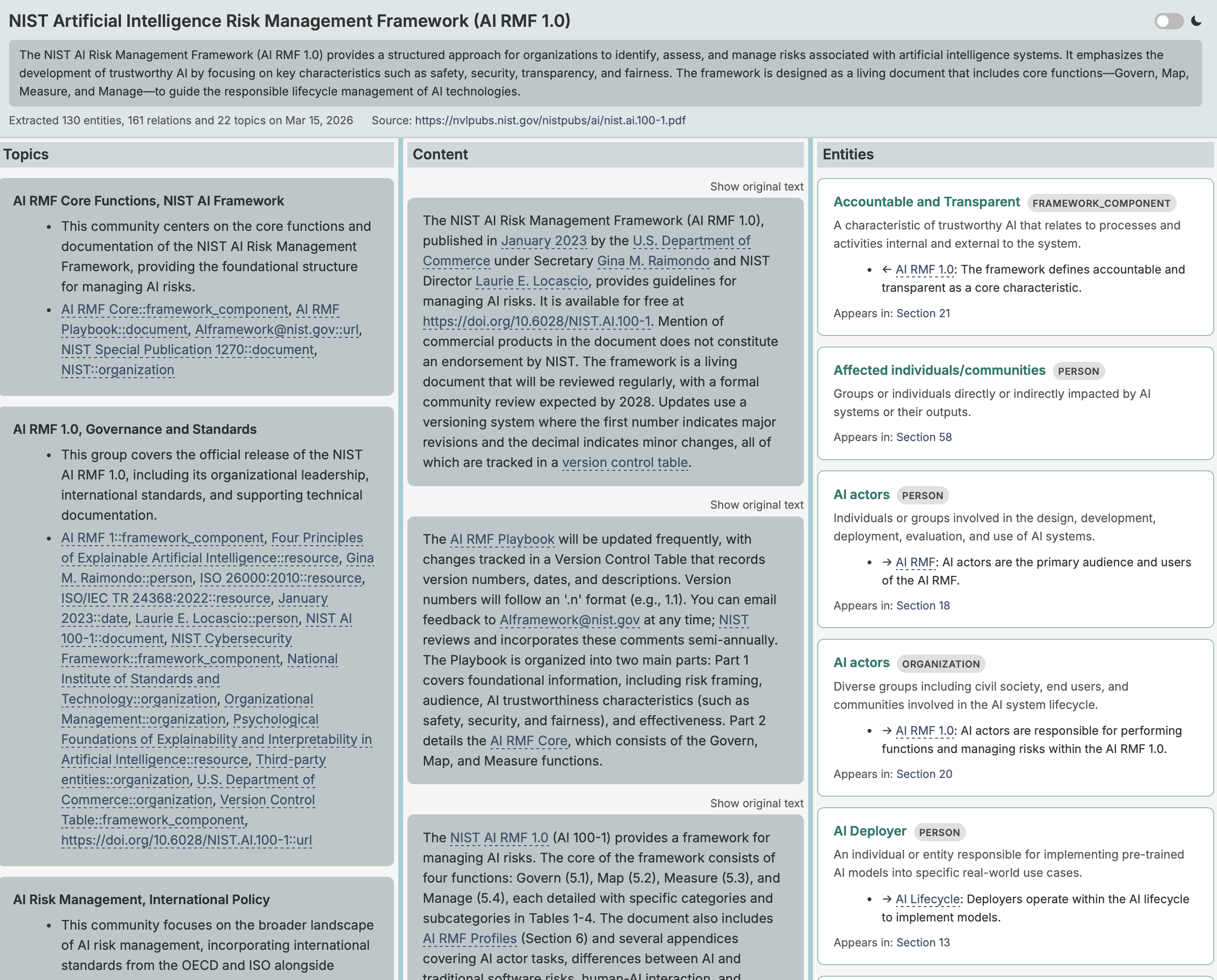
The NIST AI Risk Management Framework (AI RMF 1.0) provides a structured approach for organizations to identify, assess, and manage risks associated with artificial intelligence systems.
Ready to unlock your documents?
The basic version is open source. Get started today or request a demo of the full platform.